“The church is responsible to speak out when Christianity is used to justify hate. It’s not just a political concern – it’s about staying true to the heart of the gospel.” This was, according to Socorro Heepe, one of the most important takeaways from the recent International Ecumenical Conference on Racial Justice in Berlin.
Heepe was the Convocation’s Racial Justice Ministry representative to the conference – “Hope Makers: From Hostility to Hospitality – which brought together representatives from the Church of England (Diocese in Europe and the Racial Justice Unit), the Evangelical Church in Germany (EKD), the World Council of Churches (WCC), United Society Partners in the Gospel (USPG), academic institutions, interfaith organizations, and civil society partners.
The initiatives were started by the Church of England’s Diocese in Europe in 2023 and spearheaded by Archdeacon Dr. Leslie Nathaniel, along with Fr. Vinod Victor, whose church in Freiburg is the recipient of a grant from the Convocation Refugee Grant Program. “Current realities in Europe present a context of conflict, fear, and disregard for human life,” Victor said. “Churches have a calling and a responsibility to speak out.”
Heepe noted that this meeting marked a deliberate shift toward practical frameworks and institutional commitments addressing racial justice, democratic resilience, digital culture, and the public responsibilities of churches in contemporary Europe. “When faith is distorted to spread division, the church has a duty to respond clearly and courageously, showing what it truly stands for,” she said.
Several thematic movements were highlighted during the four-day conference: moving from hostility to hospitality, from lament to action, from insight to public witness, and from woundedness to responsibility. However, Heepe pointed out that “the conference not only analyzed challenges but also identified seven concrete directions for future work. These included practical actions such as: supporting informed civic discourse, implement institutional reform within individual churches, promote digital literacy within congregations, and develop long-term collaboration structures with other faith communities.
“Overall, the conference brought together theological reflection, policy analysis, and practical experience to address the challenges facing democratic societies and the churches that serve within them,” she added. “The conference affirmed that the movement from hostility to hospitality requires sustained institutional responsibility, public engagement, and a shared commitment to justice.”
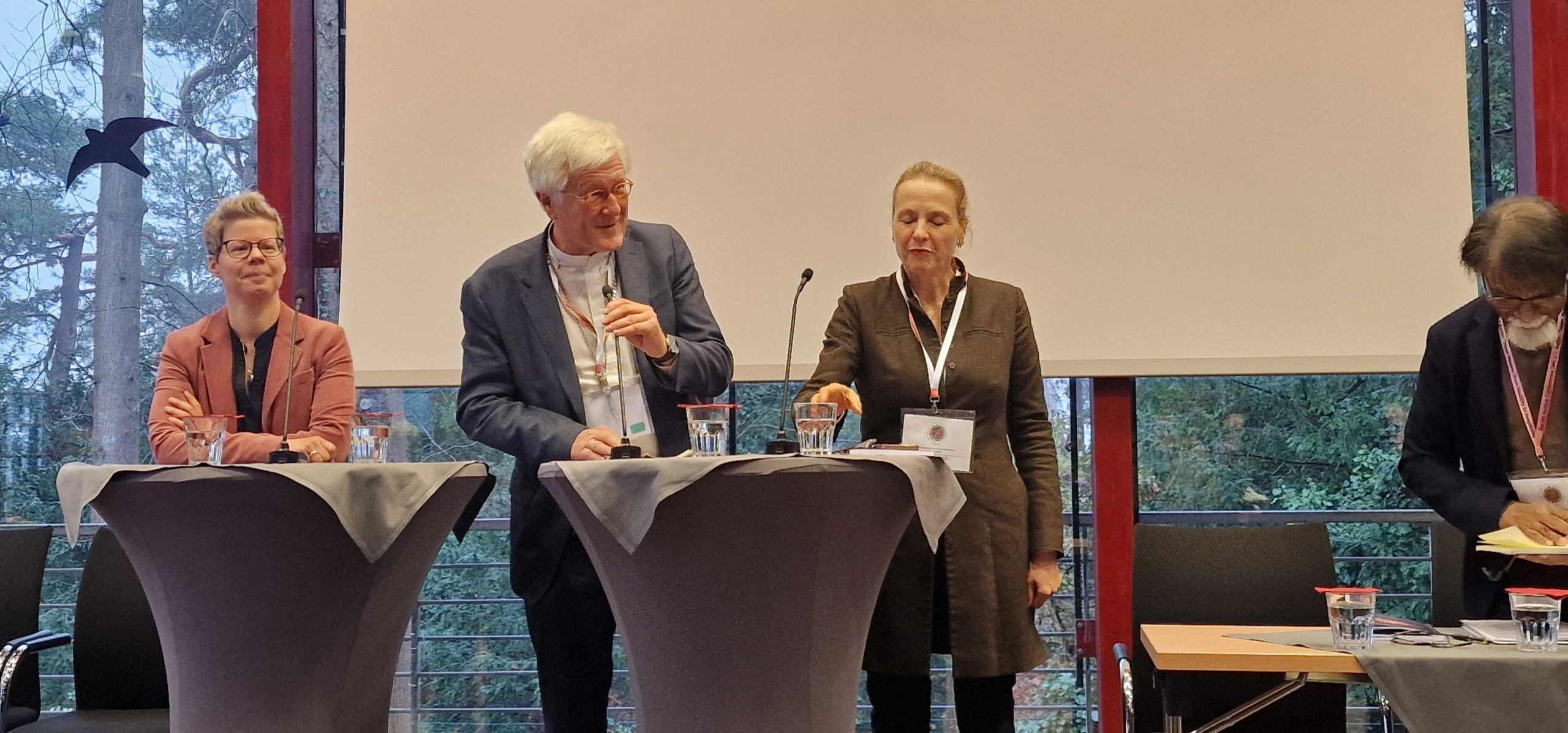
Top left: Dr. Silke Lechner, Deputy Commissioner for Churches, Religious and Ideological Communities, Senate Department for Culture and Social Cohesion, Berlin; Bishop Prof Dr. Heinrich Bedford-Strohm, the Moderator of the World Council of Churches, Hon. Professor University of Bamberg and the University of Stellen Bosch; Prelate Dr. Anne Gideon, Representative of the Council of the EKD with the Federal Republic of Germany and the European Union.
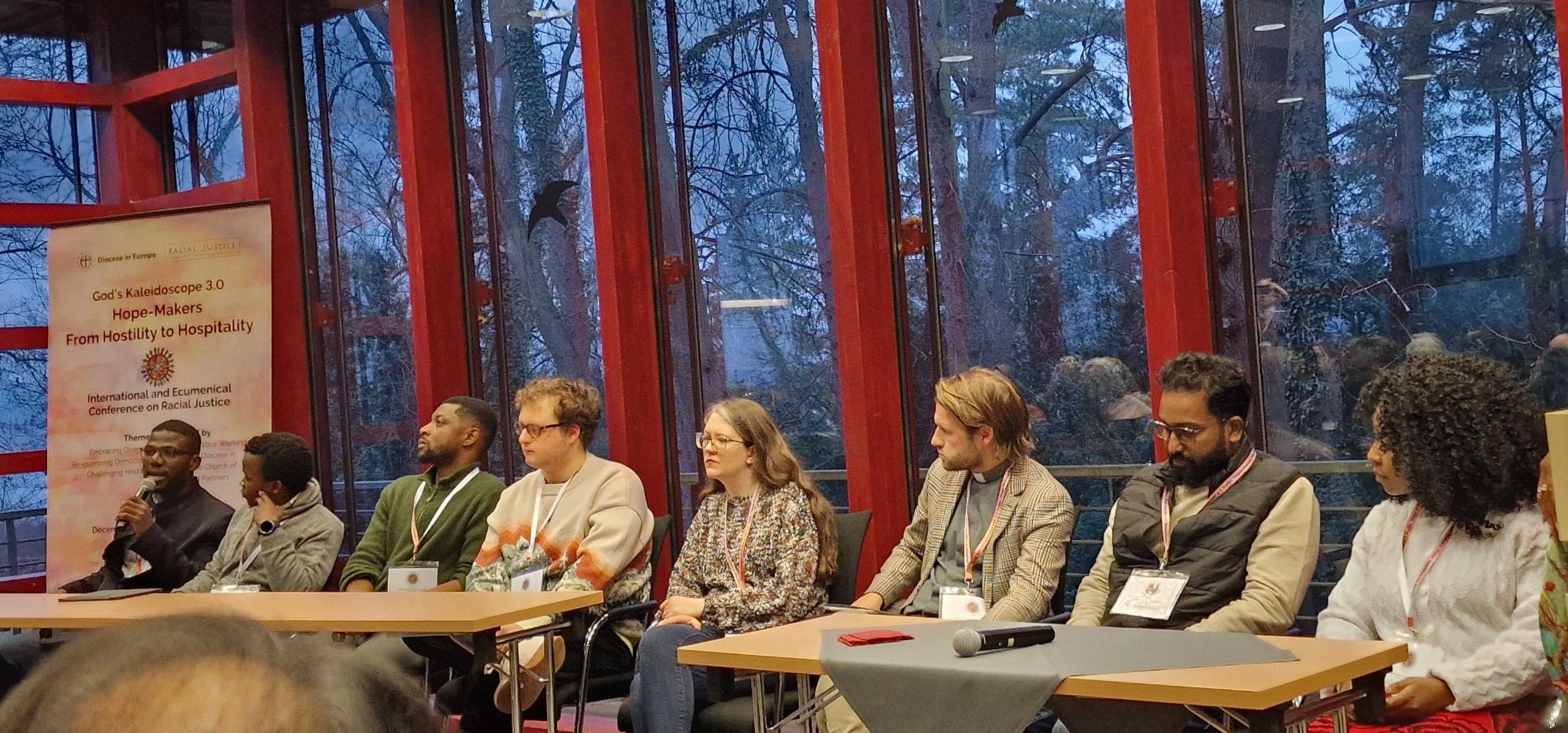
Top right: Voices of Young People
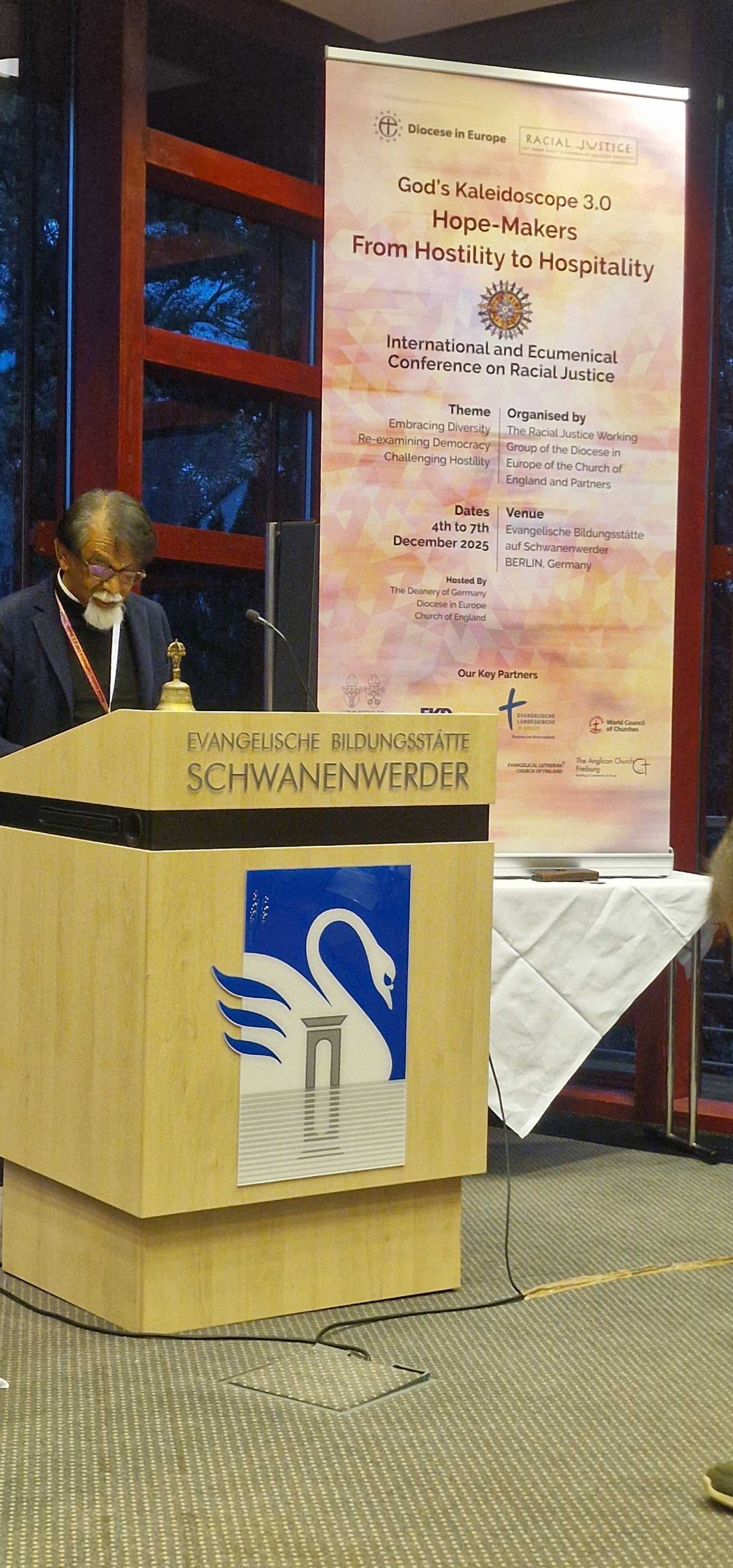
Bottom left: The Venerable Dr. Leslie Nathaniel (Archdeacon of the East, Germany and Northern Europe and Chair of the Diocesan Racial Justice Working Group and member of the Focal Group Racial Justice Unit, Church of England).