“Fragrance is always inviting. Fragrance reaches out, it can reach out to people who are not expecting fragrance to come,” said Fr. Vinod Victor. And being a fragrant presence in the southern German city of Freiburg is the aim of an extensive refugee outreach program developed by the Anglican Church Freiburg using a grant from the Convocation Refugee Grant Program (CRGP).
The church has over 20 different programs, many of which initially began by looking at ways to transform the church community, Victor said. When he came to Freiburg five years ago, he looked at the church’s existing strengths and found hospitality was already a hallmark of the community. “It was a welcoming and inviting space with a lot of small groups – women, men, seniors, young adults, and families.
Freiburg also has one of the initial reception centers for refugees in Germany; many members of the church who work or study at the University of Freiburg were doing research on migration or were already actively engaged in the work among refugees and asylum seekers.
“So we thought – let’s do something simple. Let’s open up our tables to refugees and asylum seekers,” he said. “The biblical lesson that when you give a banquet, you do not invite just your friends but those on the peripheries and margins of society; this is the theological thinking we brought in.”
They started small, Victor explained; the first men’s breakfast that opened up had eight men from the refugee center. As interest has continued, each of the church’s small groups intentionally invites people from the refugee center to join them several times a year.
As church members got to know more of the refugees, they realized one of the hardest things in the camp is people are not given the freedom to cook. While the meals provided are nutritious, “they are typical German/European and, for many, bread is not part of their eating habits. They missed their own foods and spices,” Victor explained.
A group of young girls from Afghanistan asked Victor if there was some place they could cook. They said they would bring their own food, but they needed a kitchen. And so, a second outreach was created; parishioners opened their kitchens and invited refugees to cook and then share a meal with one another. “One night, we decided to have an Indian evening, and someone asked if we could close the windows because of the smells of the spices. Our job is not only to open the eyes of the people, but also their noses,” Victor quipped. Open Kitchen at the Church will be a regular event in the new year, providing space not only for cooking but also for meaningful interaction and integration.
The first phase of the church’s program was doing something concrete that expanded their perspectives and provided hospitality for the refugees. The second phase has become listening. “What we do has evolved. How do we really listen meaningfully?” Victor asked. “And when we sit with these people, change is slowly happening to us.”
Conversation salons, art therapy that encourages refugees to create art and then talk about what it means to them and their refugee journey, hikes for parishioners and refugees, photo contests for the teenagers – all are ways the church is seeking to connect and build bridges with refugees in Freiburg.
One bridge has been a program for women and children developed by Roberto Abrego and his wife, Priscila Pinales, both of whom worked extensively with migrants and refugees in Mexico before coming to Germany to study. “When we came to Freiburg, we wanted to go somewhere we could help people. We weren’t particularly attracted to working with children at first, but it was what was needed so we said ‘OK’.”
Abrego admitted it was difficult at first. The children are all ages, come from different places, and lack any common language. “But we started to learn what worked better for them, better for us. What really works well is handcrafts. The girls especially love doing bracelets. With the support of the Anglican church, we now have a lot of supplies to do this.”
It is still difficult since refugees only stay in the Freiburg camp for a few months and the children cannot attend school. Nevertheless, their program gives the children something to do and a space to be, Abrego said. “My wife has developed a group for only girls where they can talk, laugh, do make-up. It’s another space for only girls in cultures where women are treated differently. They probably cannot talk but they can laugh.
“In my experience, it is a place where I can see God. I can see He is always with people, walking beside them. It fortifies my path, too,” Abrego added.
Both Victor and Abrego reflected on how the programs have drawn people more deeply into the life of the church. “The willingness of congregation to adapt and change has been amazing,” Victor observed. “People are not just going to church on Sunday. These programs are shaping how they see God and then put their faith into practice,” Abrego said.
These changes have also included structural changes. The church council now has at least one member from every continent, including a newly inducted woman from Bethlehem. Using the diversity and academic background of many of the parishioners, they offer groups and presentations on mental health, on trauma, on domestic violence. They seek to connect speakers of the same language from the congregation with those in the refugee center. Another result has been “the development of focused research on our diverse projects with several interesting publications in the pipeline. We are doing whatever is possible with the available expertise,” Victor concluded.
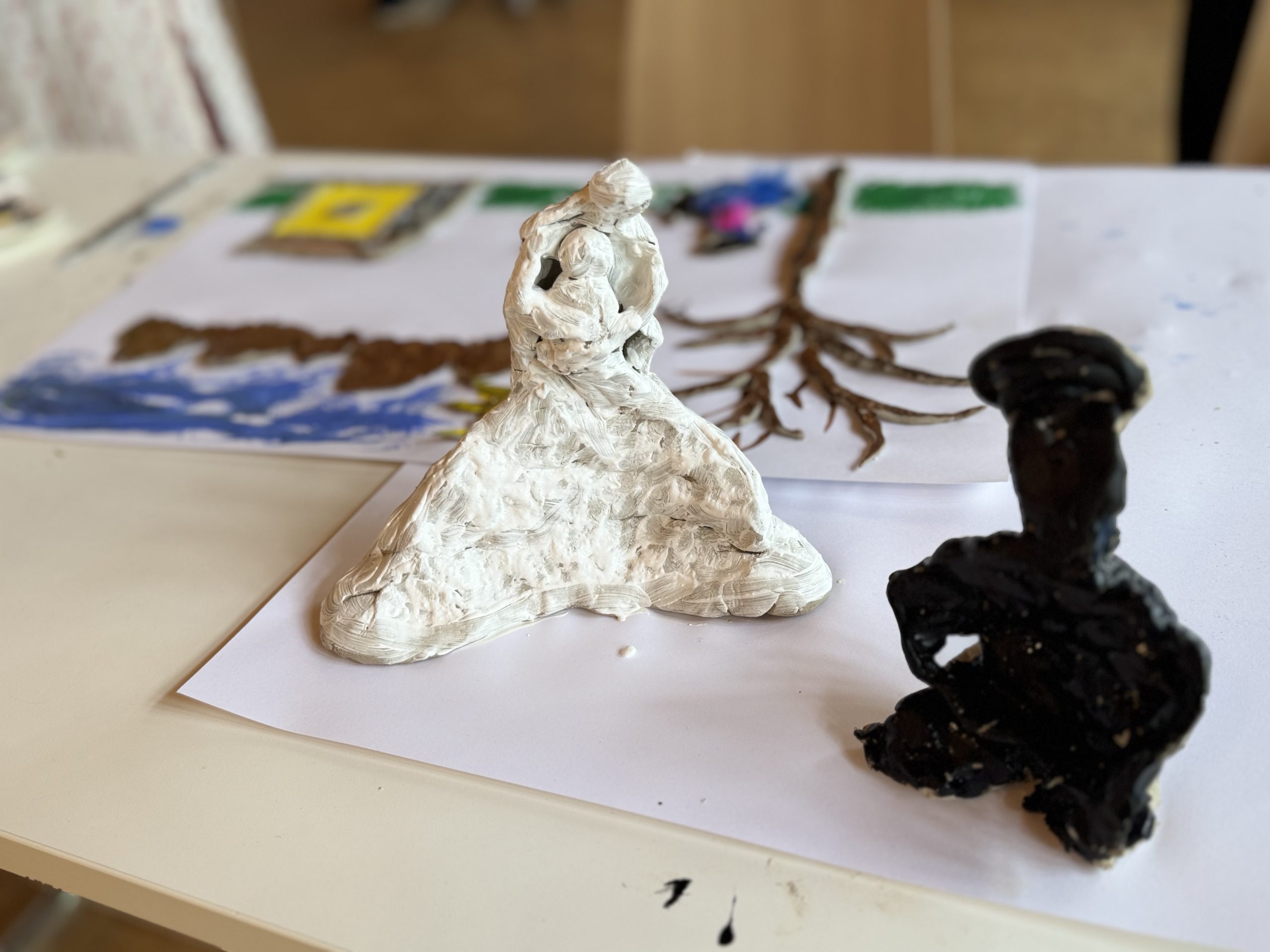
An Afgan woman depicted her plight with clay, the mother running while holding her child close while the forces try to stop her from escaping.
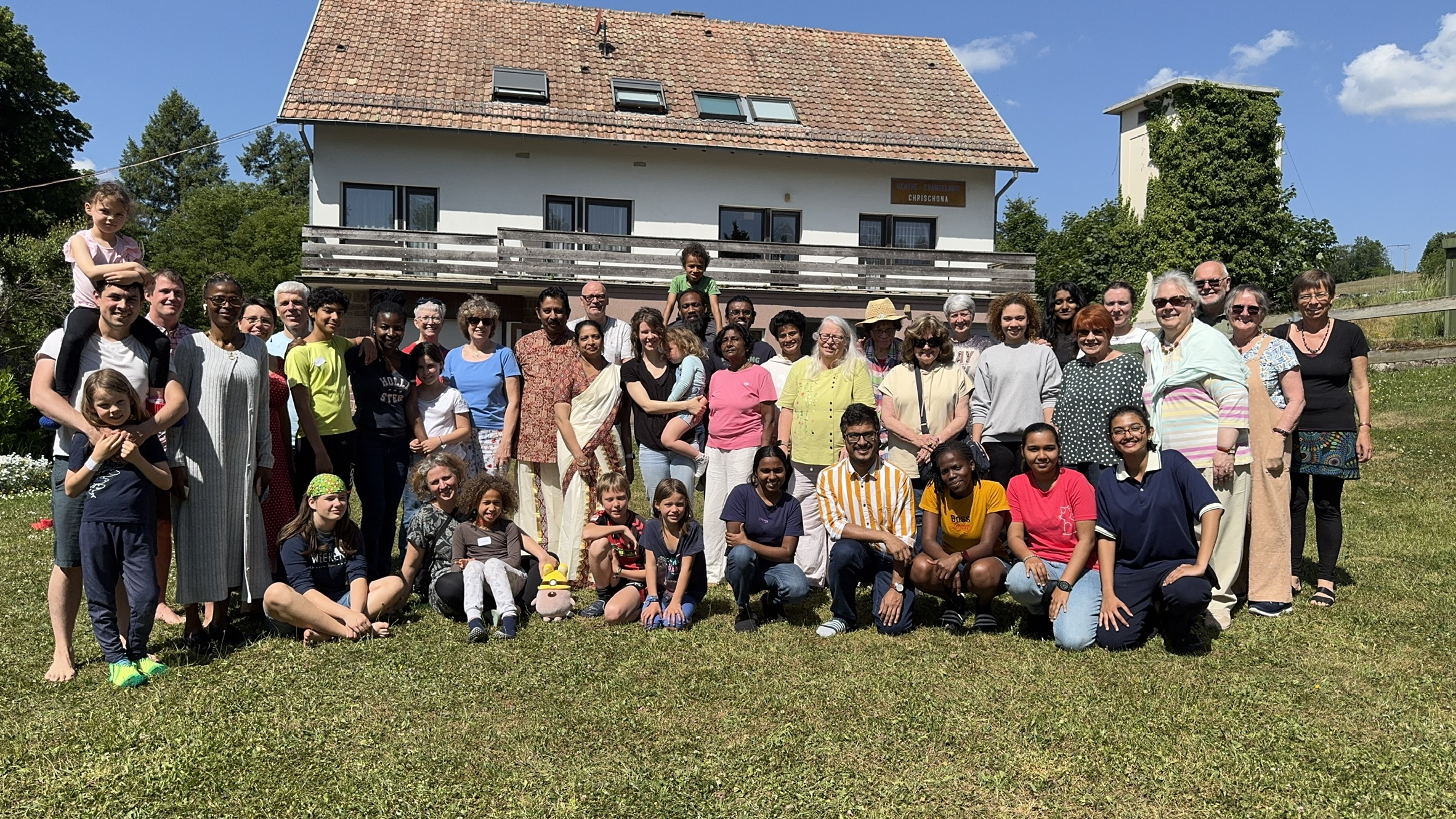
A weekend away where the community brainstormed on what it means to be a fragrant community. We were listening to the voices and expectations of migrants and refugees.
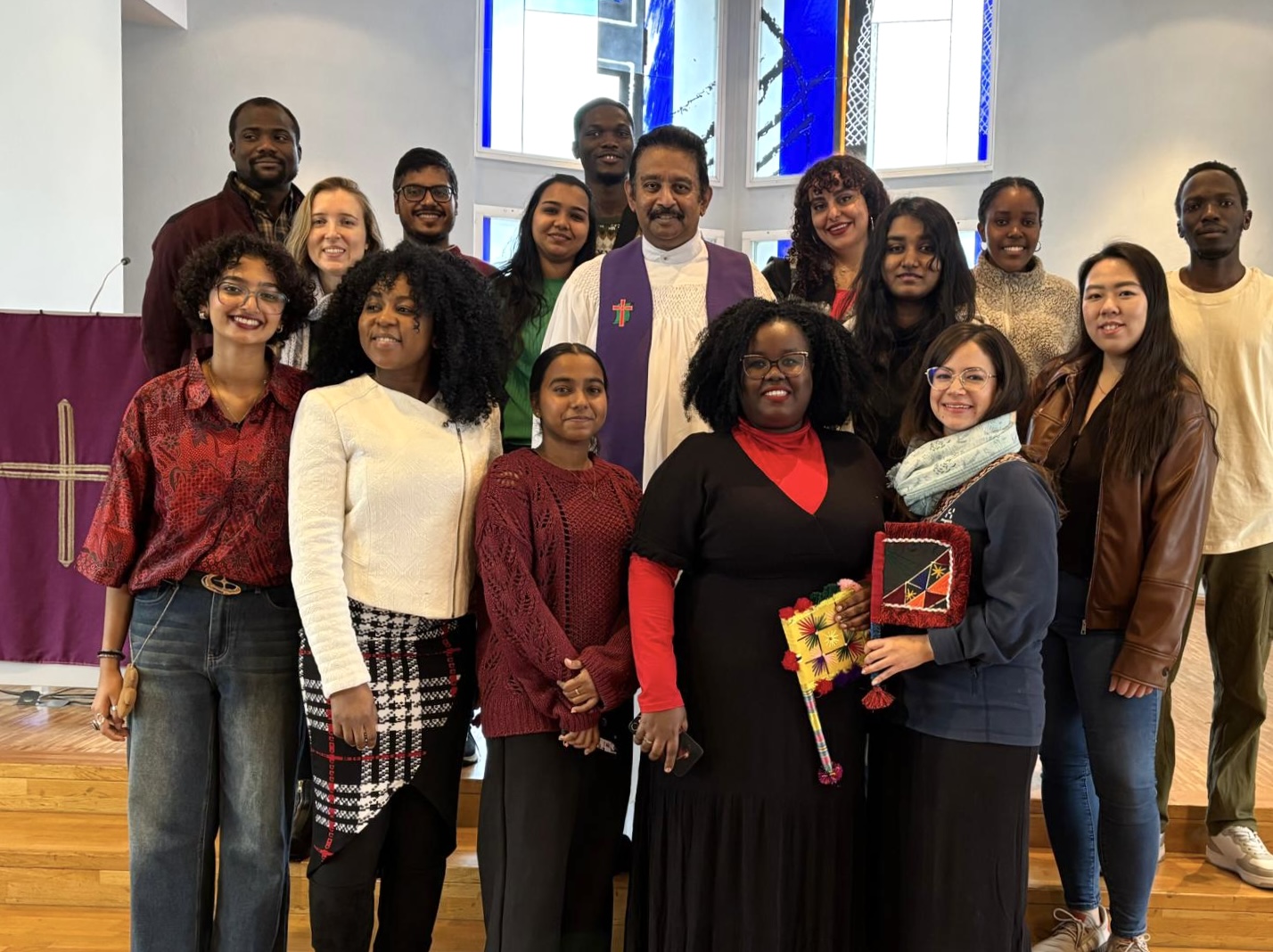
Young adults after a Sunday service celebrating diversity and inclusion. They are always willing to include their peers from the refugee camp as part of their community.