
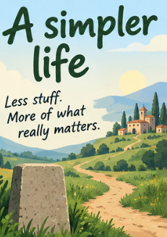
There’s a tension in the Christian life between the consumerist world that surrounds us and what the Bible teaches us in Matt. 6:19-21. The first equates material possession and accumulation of wealth with success; the second reminds us: “Lay not up for yourselves treasures upon the earth, where moth and rust consume, and where thieves break through and steal, but lay up for yourselves treasures in heaven. … For where thy treasure is, there will thy heart be also.”
Most of us will not go as far as Saint Francis and embrace absolute poverty as a way of life. But are there practical things we can do that recalibrate our daily reality?
Perhaps the idea of going back to life in a rural cottage, growing your own vegetables, and cutting firewood by hand is not for you. But there are a number of intriguing YouTube channels dedicated to reaching autarky (economic self-sufficiency) that can provide inspiration. One option is solar panels, which are efficient enough to power most homes today.
So are progress and stewardship of God’s creation contradictory? We are not the first, or the only, ones to wrestle with this question. Shortly after the death of Francis in 1232, his elected successor Brother Elias of Cortona started raising funds to build the Basilica of San Francesco d’ Assisi. In doing so, he alienated the traditionalists in the order who felt the building was not in keeping with their founder’s views on poverty. I suspect that most people who visit Assisi today would agree with them.
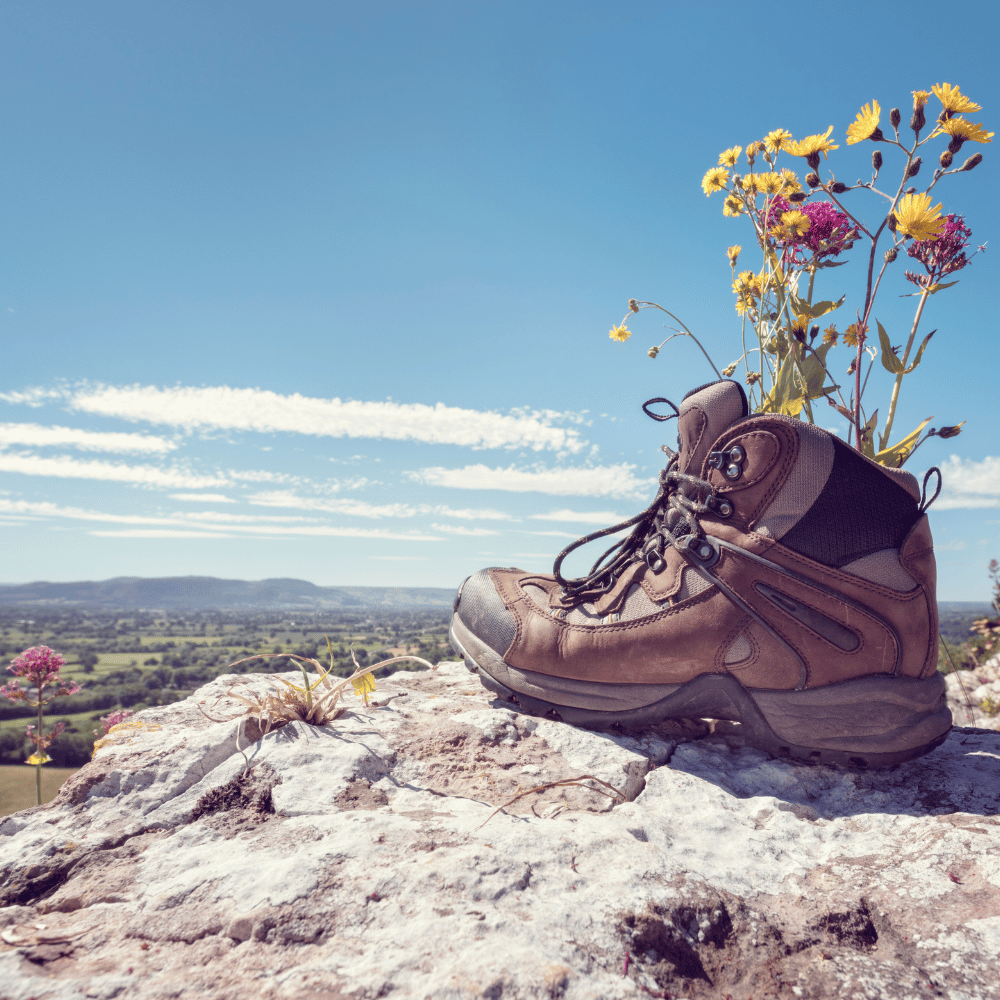
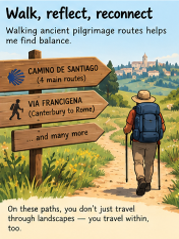
One habit I’ve developed recently to manage this balance in my life is to walk two week-long pilgrimages on medieval pilgrimage routes in Europe. Of course, the best known of these is the Camino de Santiago, which has been the subject of numerous films, books and documentaries; it has also seen a boom in the number of hikers since Covid. The Camino itself has at least four different ways to reach Santiago. Another pilgrimage is the Via Francigena from Canterbury to Rome.
On a recent pilgrimage, my friends and I were overtaken by a grumpy lady who didn’t smile or acknowledge our greetings as she walked past us. Head down into the wind with a sun hat firmly screwed on. This is unusual behaviour, but we try to suspend judgement (although it didn’t stop us from calling her “grumpy lady”) because we’ve heard a lot of pretty tragic stories over the years from fellow pilgrims. That evening, it so happened that “grumpy lady” was staying at the same hostel we were and while we were waiting for dinner, we shared a beer and started talking.
People walk with you, you talk, you share. Sometimes you wait for them, other times they wait for you, they share things about their personal lives and soon you’re not strangers but companions. I find something else walking: the beauty of humanity, the sweetness of strangers and the Holy Spirit at work. “Grumpy lady” was having problems at work and decided to walk a few days on her own and not talk to anyone so she could think through her issues. But she met us and before long the conversation turned into a consulting session on CPG marketing and organization design – topics my friends and I have over 100 years of combined experience with.
When you walk for six to eight hours a day with everything that you need to survive on your back, the pilgrimage becomes more than a journey through hill and vale. It’s a journey that reminds you each time of the essentials – the human heart. “Forget not to show love unto strangers; for thereby some have entertained angels unawares” (Heb. 13:2).
I’m not ready for absolute poverty or even for autarky, but my journeys on thousand-year-old walking paths remind me that a simpler life is not just desirable but also possible.