
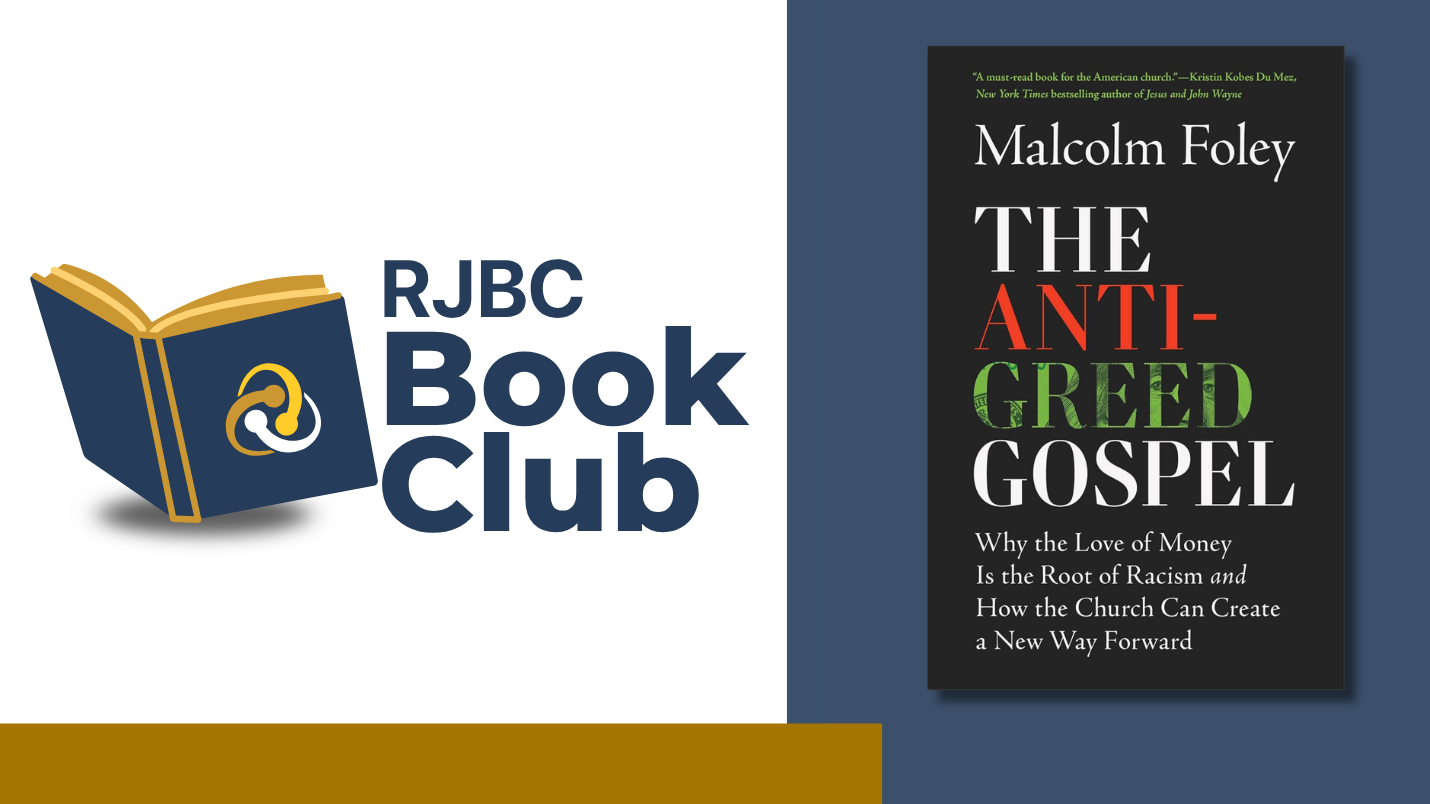
Named as one of the five finalist books for the US 2026 Christian Book Award in the category of Faith and Culture, our July book challenged us to rethink racist violence and its legacy which still haunts us today.
In the first part of the book, Foley wears his historian hat to lay out the root of racism: not identity, hate and ignorance, but greed. Greed is what fuelled slavery and lynching.
The story of race … is a narrative that allows people to accumulate more in order to increase their power and influence, not for the sake of the common good but for the sake of selfish ambition. (p 21)
Since Foley’s dissertation was on lynching, he could detail how blacks survived in a ‘Christian’ society hellbent on their deaths. He believes the historical figure who best understood the economic driver of black (but also indigenous and immigrant) oppression was journalist and activist Ida B. Wells (1862-1931) who tallied lynchings (southern horrors) and advocated boycotts and migration to the North (which we learned about in Isabel Wilkerson’s Caste (our Jan 2024 book) to escape white exploitation.
Seems as if during our sessions discussing a book we’ve all just read, inevitably the question arises: So, what can we do? Donning a pastor’s hat, Foley spends the last just under half his book advocating for a vision of communities which accept Jesus’ words in the Sermon on the Mount – ‘You cannot serve God and Mammon’ – at face value. The church is called to ‘love, feed, clothe and materially invest in the well-being’ of its neighbours. This goes far beyond good will and charity; rather, he agrees with Basil the Great that loving our neighbour means having no more than him/her: ‘The more you abound in wealth, the more you lack in love.’
But if someone has material possessions and sees a brother or sister in need but refuses to help—how can the love of God dwell in a person like that? (1 John 3:17, CEB)
We wondered how our churches and communities – and nations – would change by living out the anti-greed gospel.
Foley gives engaging online interviews: this one is not long and gives a good impression of this complex topic which seems more and more pertinent:
Written by Carol Adeney & Jane Scheiring.